1st Trimester of Pregnancy: What Should You Know?

Mobile Screening Timing for Kids: A Complete Guide for Parents
May 14, 2026
Prevention of Malaria: Essential Tips to Stay Safe and Healthy
May 25, 2026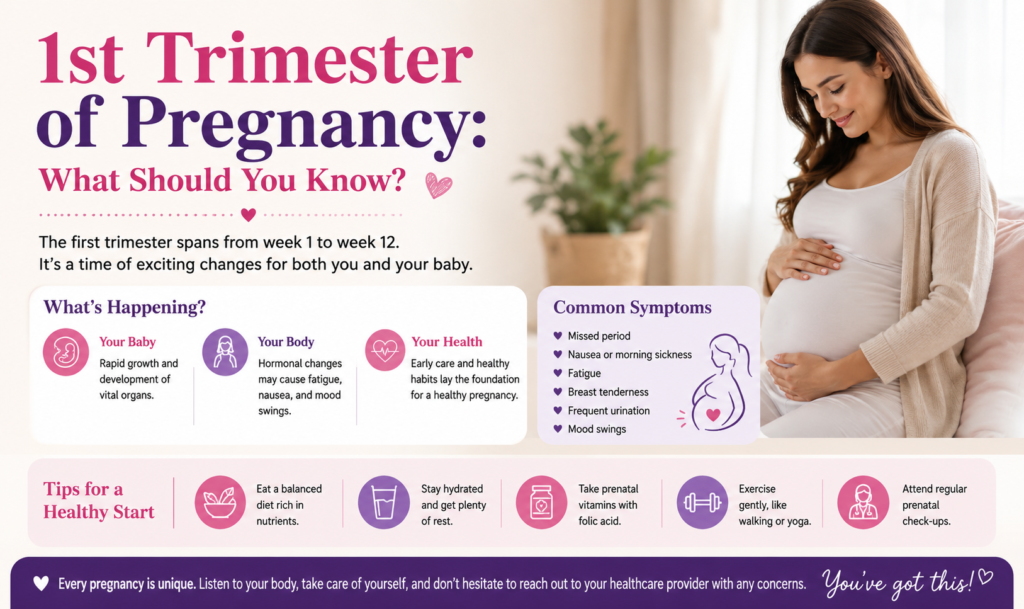
Pregnancy is one of the most beautiful and life-changing journeys in a woman’s life. The first trimester, which covers the first 12 weeks of pregnancy, is especially important because this is the stage where your baby begins to develop rapidly. During this period, a woman experiences many physical, emotional, and hormonal changes. Understanding what happens during the first trimester can help you stay healthy, confident, and prepared for the months ahead.
In this blog, we will discuss everything you should know about the first trimester of pregnancy, including symptoms, diet, precautions, medical care, and lifestyle tips.
What Is the First Trimester?
The first trimester starts from week 1 and continues until the end of week 12. Even though your baby may still be tiny, major development takes place during this phase. The brain, heart, spinal cord, and other organs start forming in the early weeks.
Many women may not even realize they are pregnant during the first few weeks. However, as hormones increase, different signs and symptoms begin to appear.
Common Symptoms During the First Trimester
Every pregnancy is unique, but some common symptoms are experienced by most women.
1. Morning Sickness
Nausea and vomiting are among the most common signs of pregnancy. Morning sickness can happen at any time of the day and usually starts around the 6th week.
Tips to manage it:
- Eat small meals frequently
- Avoid spicy and oily food
- Drink enough water
- Keep dry snacks nearby
2. Fatigue
Your body works extra hard to support the growing baby, which can make you feel tired all the time. Hormonal changes also contribute to exhaustion.
3. Breast Tenderness
Hormonal changes may cause breasts to feel sore, swollen, or sensitive.
4. Mood Swings
Rapid hormonal fluctuations can affect emotions. It is normal to feel emotional, anxious, or sensitive during this time.
5. Frequent Urination
As the uterus grows, it puts pressure on the bladder, increasing the need to urinate.
6. Food Cravings and Aversions
Many women suddenly crave certain foods while disliking others they once enjoyed.
Baby Development During the First Trimester
The first trimester is crucial for fetal development.
Weeks 1–4
- Fertilization takes place
- The embryo attaches to the uterus
- Placenta formation begins
Weeks 5–8
- Heartbeat starts
- Brain and spinal cord begin developing
- Tiny arms and legs form
Weeks 9–12
- Facial features become clearer
- Fingers and toes develop
- Baby starts moving slightly
By the end of the first trimester, the baby is about the size of a lime.
Importance of Prenatal Care
Regular prenatal checkups are essential during pregnancy. Your doctor monitors your health and your baby’s development through tests, ultrasounds, and examinations.
Early prenatal care helps:
- Detect complications
- Monitor fetal growth
- Guide proper nutrition
- Ensure a healthy pregnancy
Consulting an experienced specialist is very important. If you are searching for expert pregnancy care, consulting the Best Gynecologist Doctor in Janakpuri Delhi can help ensure proper guidance and support throughout your pregnancy journey.
Essential Nutrients During the First Trimester
A healthy diet plays a major role in supporting both mother and baby.
1. Folic Acid
Folic acid helps prevent neural tube defects in the baby.
Foods rich in folic acid:
- Green leafy vegetables
- Citrus fruits
- Beans
- Fortified cereals
2. Iron
Iron supports healthy blood production and prevents anemia.
Iron-rich foods:
- Spinach
- Lentils
- Red meat
- Dry fruits
3. Calcium
Calcium helps in the development of the baby’s bones and teeth.
Sources include:
- Milk
- Yogurt
- Cheese
- Almonds
4. Protein
Protein supports tissue growth and development.
Good protein sources:
- Eggs
- Pulses
- Fish
- Chicken
- Nuts
5. Hydration
Drinking enough water prevents dehydration and supports healthy circulation.
Foods to Avoid During Pregnancy
Certain foods can increase the risk of infection or harm the baby.
Avoid:
- Raw or undercooked meat
- Unpasteurized dairy products
- Excess caffeine
- Alcohol
- Smoking
- Processed junk food
Lifestyle Tips for a Healthy First Trimester
Get Enough Rest
Fatigue is common during early pregnancy, so listen to your body and rest when needed.
Stay Active
Light exercise such as walking or prenatal yoga can improve mood, circulation, and energy levels.
Reduce Stress
Stress management is important for both mother and baby. Meditation, music, and relaxation techniques may help.
Take Prenatal Vitamins
Doctors usually recommend prenatal supplements to meet nutritional needs.
Avoid Self-Medication
Never take medicines without consulting your doctor during pregnancy.
Warning Signs You Should Never Ignore
While mild discomfort is normal, certain symptoms require immediate medical attention.
Contact your doctor if you experience:
- Heavy bleeding
- Severe abdominal pain
- High fever
- Persistent vomiting
- Severe dizziness
- Painful urination
Early treatment can prevent complications and protect both mother and baby.
Emotional Changes During Pregnancy
Pregnancy affects emotional health as much as physical health. Hormonal changes, lifestyle adjustments, and anxiety about motherhood may lead to emotional ups and downs.
Ways to support emotional well-being:
- Talk openly with loved ones
- Join pregnancy support groups
- Practice self-care
- Seek professional help if needed
Remember, emotional health is just as important as physical health during pregnancy.
First Trimester Medical Tests
Your doctor may recommend several tests during the first trimester.
These may include:
- Blood tests
- Urine tests
- Ultrasound scans
- Blood pressure monitoring
- Thyroid testing
- Screening for genetic conditions
These tests help ensure your pregnancy is progressing normally.
Can You Travel During the First Trimester?
In most healthy pregnancies, travel is generally safe during the first trimester. However, it is important to:
- Stay hydrated
- Avoid long periods of sitting
- Carry healthy snacks
- Consult your doctor before traveling
If you have complications or a high-risk pregnancy, your doctor may advise against travel.
Weight Gain in the First Trimester
Many women gain only a small amount of weight during the first trimester. Some may even lose weight because of nausea and vomiting.
Healthy weight gain depends on:
- Pre-pregnancy weight
- Diet
- Overall health
Your doctor will guide you about healthy weight goals.
Importance of Family Support
Support from family and loved ones can make pregnancy easier and more enjoyable. Emotional encouragement, proper care, and understanding help reduce stress and improve mental well-being.
Partners and family members should:
- Attend doctor visits when possible
- Help with household tasks
- Offer emotional reassurance
- Encourage healthy habits
Preparing for the Next Trimester
As the first trimester comes to an end, many women start feeling more energetic. The second trimester is often considered the most comfortable stage of pregnancy.
To prepare:
- Continue healthy eating
- Attend regular checkups
- Maintain physical activity
- Learn about childbirth and parenting
Being informed helps you feel more confident throughout pregnancy.
Final Thoughts
The first trimester is an exciting yet challenging phase of pregnancy. Your body undergoes significant changes while your baby grows rapidly inside the womb. Proper nutrition, regular medical care, emotional support, and healthy lifestyle choices are essential during this period.
Understanding the symptoms, precautions, and medical needs of early pregnancy can help ensure a safer and healthier journey for both mother and baby. Always consult a qualified healthcare professional for personalized advice and never ignore unusual symptoms.