
10 Early Signs of Nutritional Deficiency in Children
Helping Children Develop Healthy Sleep Patterns
February 9, 2026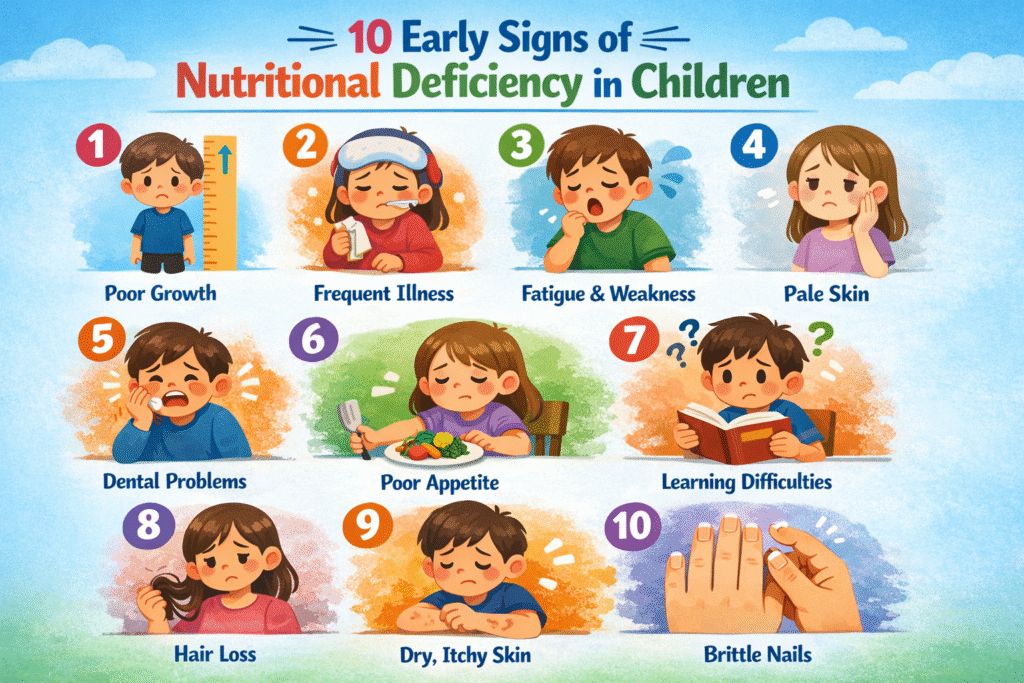
Children grow fast. Their brains, bones, immunity, and hormones are constantly developing. Because of this, even small nutritional gaps can show up quickly in their behavior, energy levels, and physical health. The problem is that early signs are often ignored or mistaken for “normal kid behavior.”
If you notice consistent changes, it’s worth paying attention. Here are 10 early signs of nutritional deficiency in children and what they could mean.
1. Constant Fatigue and Low Energy
If your child seems tired even after proper sleep, nutrition could be the issue. Iron deficiency is one of the most common causes of fatigue in children. It can lead to anemia, reducing oxygen supply to the body.
You may notice:
- Lack of interest in play
- Getting tired easily during school activities
- Pale skin
Low levels of vitamin B12 and folate can also contribute to weakness and lethargy.
2. Frequent Infections
Does your child fall sick very often? Repeated colds, cough, throat infections, or slow recovery can signal a weak immune system.
Vitamin C, vitamin D, zinc, and protein are essential for immunity. If the diet lacks fruits, vegetables, dairy, or protein-rich foods, the body struggles to fight infections effectively.
Frequent illness is not always “just weather change.” Sometimes, it’s a nutritional gap.
3. Slow Growth or Poor Weight Gain
Children are expected to grow steadily in height and weight. If growth charts show stagnation or slow progress, it may indicate insufficient calories, protein, or key micronutrients.
Protein deficiency, vitamin D deficiency, and calcium deficiency can affect bone development and overall growth.
A pediatric evaluation is important here, especially if the delay continues for months.
4. Pale Skin and Dark Circles
Pale skin, especially inside the lower eyelids, can be an early sign of iron deficiency. Dark circles under the eyes may also appear due to nutritional imbalance, lack of sleep, or both.
Iron-rich foods like green leafy vegetables, lentils, beans, and fortified cereals help prevent this. In some cases, supplementation is required under medical supervision.
5. Hair Fall and Brittle Nails
Mild hair fall is normal, but excessive shedding or thinning hair in children can indicate deficiency of:
- Iron
- Biotin
- Zinc
- Protein
Brittle nails, white spots on nails, or slow nail growth are also signs to watch. Nutrition plays a direct role in healthy hair and nail development.
6. Dry Skin and Skin Rashes
Persistent dry skin, rough patches, or unexplained rashes may be linked to deficiencies in vitamins A, E, or essential fatty acids.
Vitamin A is especially important for skin health and vision. If your child avoids vegetables like carrots, spinach, or pumpkin, it may affect skin and eye health over time.
7. Poor Concentration and Learning Difficulties
If your child struggles with focus, memory, or academic performance, nutrition might be contributing.
Iron deficiency has been linked to reduced cognitive function. Omega-3 fatty acids and B vitamins are also important for brain development.
A child who is constantly distracted, irritable, or unable to sit through tasks may need a nutritional assessment along with behavioral evaluation.
8. Mood Changes and Irritability
Frequent mood swings, irritability, or unexplained sadness can sometimes be related to vitamin deficiencies.
Low levels of vitamin D, B12, or magnesium can affect mood regulation. While emotional changes are common in children, persistent patterns should not be ignored.
Balanced meals help stabilize blood sugar levels, which also influences mood and behavior.
9. Delayed Wound Healing
If minor cuts or bruises take longer than usual to heal, it may indicate deficiency in vitamin C or protein.
Vitamin C supports tissue repair and immune function. Protein is essential for building and repairing body tissues.
Slow healing is a subtle but important sign.
10. Dental Problems and Weak Bones
Frequent cavities, weak teeth, or bone pain can be early indicators of calcium and vitamin D deficiency.
Children who avoid milk, dairy products, or outdoor activities (sunlight exposure) are at higher risk. Vitamin D helps absorb calcium, making both nutrients crucial for strong bones and teeth.
In severe cases, deficiency can lead to conditions like rickets, where bones become soft and weak.
Why Nutritional Deficiencies Are Increasing
Modern diets often include:
- Processed snacks
- Sugary drinks
- Low vegetable intake
- Irregular meal timings
Even children who appear healthy may not be getting balanced nutrition. Picky eating habits make it worse. Many children prefer packaged food over home-cooked meals, leading to hidden deficiencies.
Parents sometimes assume that if a child is eating “enough,” nutrition is adequate. But quality matters more than quantity.
When Should You See a Doctor?
If you notice two or more of the above signs consistently for several weeks, consult a pediatrician. Growth monitoring, blood tests, and dietary evaluation can help identify the issue early.
A Best Pediatric Doctor in Delhi can assess developmental milestones, check for anemia, vitamin deficiencies, and recommend dietary changes or supplements if needed.
In some cases, a broader evaluation through General Physician Services in Delhi may be advised, especially if symptoms overlap with other medical conditions.
Early intervention prevents long-term complications related to growth, immunity, and cognitive development.
How to Prevent Nutritional Deficiencies
Prevention is always better than treatment. Here’s what parents can do:
1. Ensure a Balanced Plate
Include:
- Protein (dal, eggs, paneer, beans)
- Whole grains
- Seasonal fruits
- Green vegetables
- Dairy or alternatives
Try to avoid relying heavily on packaged foods.
2. Encourage Outdoor Play
Sunlight exposure supports vitamin D production. At least 20–30 minutes of outdoor activity daily can help.
3. Limit Junk Food
Occasional treats are fine, but regular consumption of high-sugar and high-fat snacks can displace nutrient-rich foods.
4. Regular Health Check-Ups
Routine growth tracking and blood tests help catch deficiencies early before they become severe.
5. Don’t Self-Medicate
Avoid giving supplements without medical advice. Excess intake of certain vitamins can also cause harm.
Final Thoughts
Children may not always express that something feels wrong. Their bodies often show the signs first. Fatigue, frequent illness, poor growth, and mood changes are not things to dismiss casually.
Nutritional deficiencies are common but manageable when identified early. A balanced diet, regular monitoring, and timely medical consultation can make a significant difference in your child’s overall health and development.

