Why Iron Matters More Than You Think During Pregnancy

Common Causes of Tooth Sensitivity and How to Treat It
March 10, 2026
Tips for Summer Pregnancy: Stay Cool, Comfortable & Healthy
April 7, 2026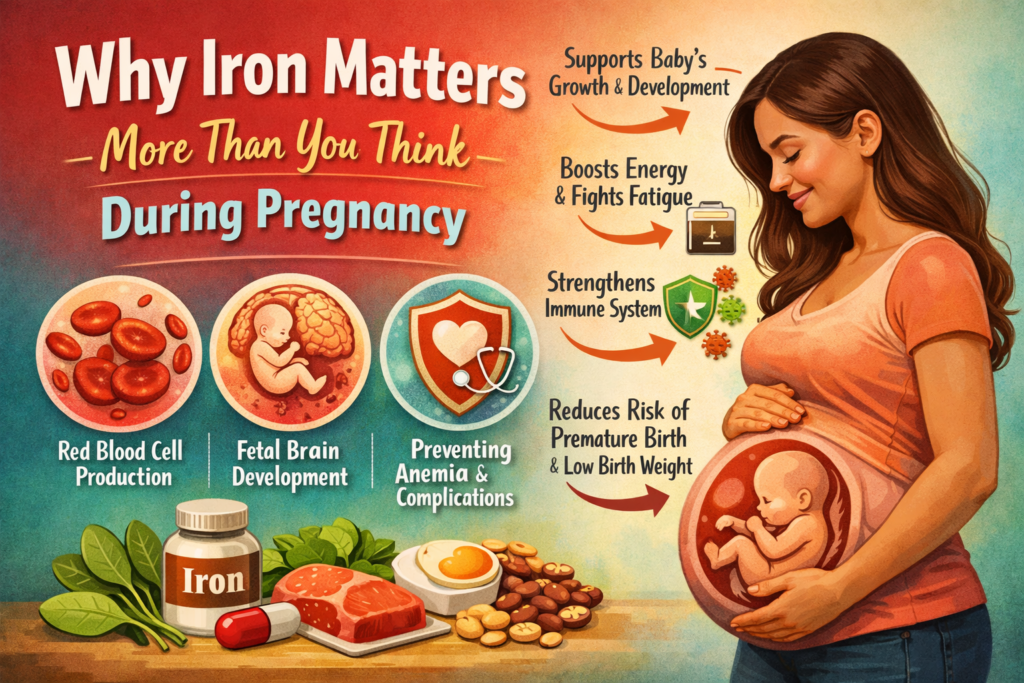
Pregnancy is not just about eating more, it is about nourishing your body with the right nutrients at the right time. Among all the essential nutrients, iron plays a critical role that many people underestimate. It directly affects both the mother’s health and the baby’s development. If your iron levels are not adequate, it can lead to complications that are often avoidable with proper awareness and care.
What Exactly Does Iron Do in Pregnancy?
Iron helps your body produce hemoglobin, a protein in red blood cells that carries oxygen throughout your body. During pregnancy, your blood volume increases significantly to support the growing baby. This means your body needs more hemoglobin, and therefore, more iron. Without enough iron, your body struggles to supply sufficient oxygen to both you and your baby. This can lead to fatigue, weakness, and more serious complications if ignored.
Why Iron Requirements Increase During Pregnancy
In a normal situation, your body manages with a standard level of iron intake. But during pregnancy, everything changes. Your body starts working overtime. You are supporting your own health, your baby’s growth, and the development of the placenta.
Your iron requirement nearly doubles because:
- Your blood volume increases by up to 50%
- Your baby needs iron for brain development
- The placenta requires iron to function properly
This is why doctors often recommend iron supplements along with dietary intake. Relying only on food might not be enough for many women.
Signs of Iron Deficiency You Should Not Ignore
Iron deficiency does not always show up dramatically in the beginning. It often builds slowly, which makes it easy to ignore. But your body gives signals if you pay attention.
Common signs include:
- Constant tiredness even after rest
- Pale skin or lips
- Shortness of breath
- Dizziness or headaches
- Cold hands and feet
- Unusual cravings like eating clay or ice (pica)
If you notice these symptoms, do not brush them off as “normal pregnancy fatigue.” That assumption can cost you later.
Risks of Low Iron Levels During Pregnancy
Let’s be clear. Ignoring iron deficiency is not harmless. It can lead to serious complications for both mother and baby.
For the mother:
- Severe anemia
- Increased risk of infections
- Weakness during labor
- Higher chance of postpartum depression
For the baby:
- Low birth weight
- Premature birth
- Poor brain development
- Delayed growth
This is not meant to scare you, but to make you aware. Most of these risks are preventable with timely action.
Best Food Sources of Iron for Pregnant Women
Diet plays a huge role in maintaining iron levels. But here is where many people go wrong. They assume eating “healthy” automatically means enough iron intake. That is not always true. You need to be intentional.
There are two types of iron in food:
- Heme iron (from animal sources, absorbed better)
- Non-heme iron (from plant sources, absorbed less efficiently)
Iron-rich foods you should include:
- Spinach and other leafy greens
- Lentils, chickpeas, and beans
- Red meat, chicken, and fish
- Eggs
- Jaggery (gur)
- Nuts and seeds
- Fortified cereals
How to Improve Iron Absorption Naturally
Even if you eat iron-rich foods, your body might not absorb enough of it. That’s the part most people overlook.
To improve absorption:
- Pair iron-rich foods with vitamin C (like lemon, oranges, tomatoes)
- Avoid tea or coffee right after meals
- Cook in iron utensils if possible
Small habits like squeezing lemon on your dal or salad can actually make a noticeable difference.
Do You Really Need Iron Supplements?
Here’s the honest answer: in most cases, yes. Diet alone often falls short, especially in the second and third trimesters. Doctors usually prescribe iron supplements to bridge the gap.
But don’t self-medicate. Taking too much iron can cause issues like constipation, nausea, and even toxicity in extreme cases. Always follow medical advice and stick to the recommended dosage.
If supplements make you uncomfortable, talk to your doctor instead of quitting them on your own. There are alternatives and adjustments that can help.
When Should You Start Taking Iron Seriously?
Ideally, even before pregnancy. If you are planning to conceive, checking your iron levels early gives you a head start. But if you are already pregnant, it’s never too late to correct it.
Doctors usually monitor hemoglobin levels during routine checkups. Don’t treat these tests as a formality. They are your early warning system.
If your levels are low, take action immediately instead of delaying. Waiting will only make correction harder later.
Common Myths About Iron in Pregnancy
Let’s clear a few misconceptions that often lead to poor decisions.
“I feel fine, so my iron levels must be okay.”
Wrong. Iron deficiency can exist without obvious symptoms.
“Vegetarian diet gives enough iron.”
Not always. Plant-based iron is harder to absorb, so you need to be extra careful.
“Supplements are optional.”
In many cases, they are not. Skipping them without medical advice is risky.
“Iron tablets cause problems, so better avoid them.”
Side effects can be managed. Avoiding them entirely is not the solution.
The Role of Medical Guidance
Pregnancy is not the time for guesswork. You need proper monitoring and guidance. A qualified doctor can track your iron levels, adjust your supplements, and guide your diet based on your specific needs.
If you are looking for expert care, consulting the Best Gynecologist and Obstetrician in Janakpuri Delhi, Cosmetic Gynecologist in Delhi NCR can help you stay on track with the right diagnosis and treatment approach. Personalized care matters more than generic advice.
Practical Tips to Maintain Healthy Iron Levels
You don’t need complicated routines. Just consistent, practical habits.
- Include at least one iron-rich food in every meal
- Add a vitamin C source to improve absorption
- Take supplements at the same time daily
- Avoid tea/coffee around meal times
- Keep up with regular blood tests
- Don’t ignore fatigue or weakness
Consistency beats intensity here. Small daily actions will protect you from bigger problems later.
Final Thoughts
Iron is not just another nutrient during pregnancy. It is a foundation for your health and your baby’s development. Ignoring it or taking it lightly is a mistake many people make, and often regret later.
The good part is, managing iron levels is not complicated if you stay aware and proactive. Eat consciously, follow medical advice, and listen to your body.